 MAKER GULLY

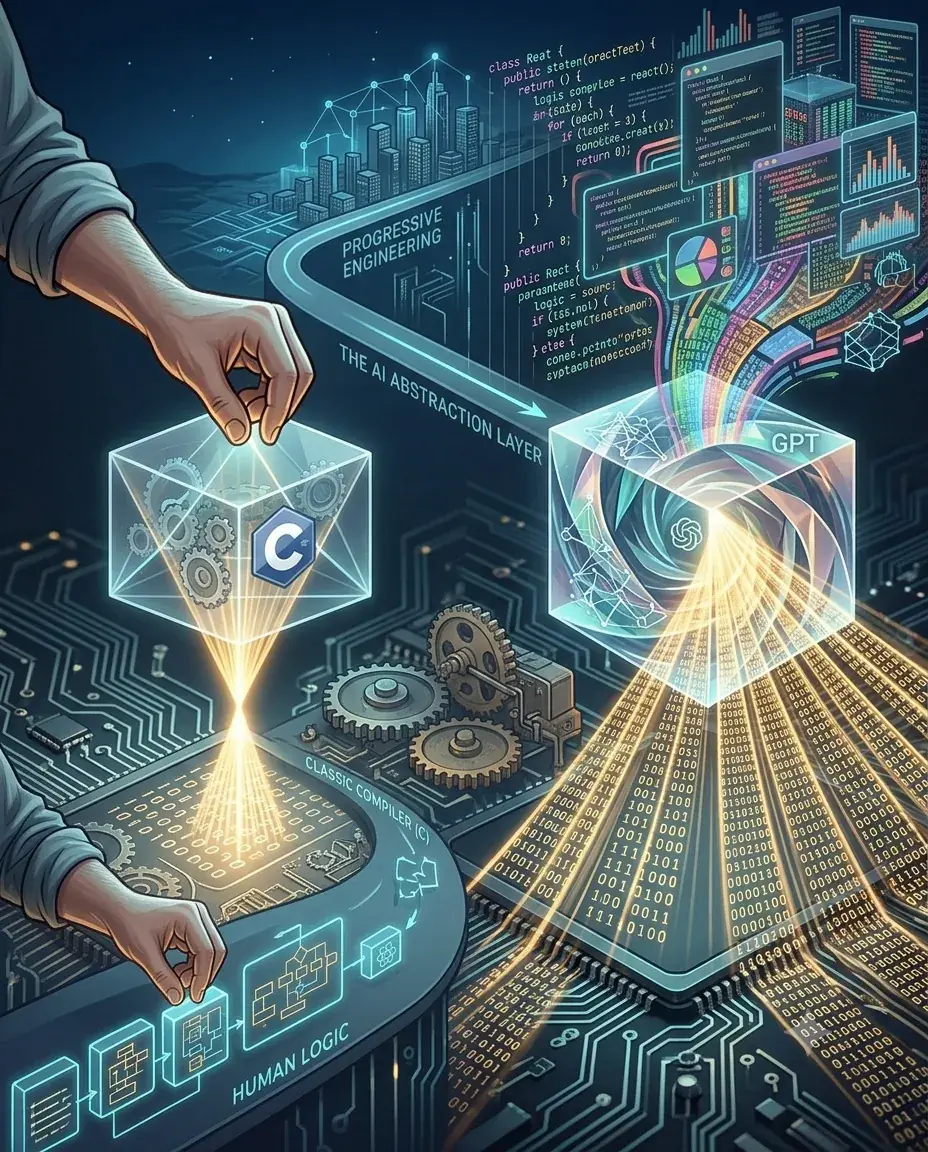
There is a subtle debate happening right now about how much AI belongs in a software project. If you use it to generate a component or unblock a bug, it's easy to feel like you didn't really do the work. The internet has a habit of making us think that if you didn't hand-craft every single line of code from scratch, you're somehow taking a shortcut.
But when Linus Torvalds spoke recently about the AI hype, he gave a reality check that frames the whole toolset completely differently.
When you're running a project like Maker Gully solo, you have to be smart about how you spend your time. If you've been on the fence about integrating AI tools into your workflow, his perspective changes the entire conversation.
The New Age of Compilers
Linus mentioned that hearing people talk about "99% of code being written by AI" actually misses the point. His counter-argument was simple: those exact same people never say, "100% of my code was written by a compiler."
Think about how programming actually evolved:
- The Past: Early engineers wrote raw machine code (literally numbers and branch offsets).
- The Shift: Then came compilers. They allowed developers to write high-level code and let a machine handle the tedious translation, boosting productivity by roughly 1,000x.
- The Present: AI is the next logical abstraction layer on top of that, offering another productivity multiplier.
Nobody thinks they aren't a real engineer just because they didn't write their own binaries by hand. We accept the compiler as a tool that automates execution. AI is exactly the same thing - it's an efficiency tool, not an autonomous creator.
A Practical Companion for a Team of One
When you are a solo builder running a business, time isn't just money - it's your entire runway. You don't have a team to delegate to, which is where AI fits in perfectly as an occasional assistant to keep things moving. Here is how to look at it:
It handles execution, you handle the architecture. Linus's core point is that you still have to understand the bigger system. You can let AI spin up a specific function or speed through boilerplate, but you still read, audit, and understand everything it outputs. The tool handles the syntax; you handle the logic, the business goals, and the product structure.
It clears out the noise. Spending limited evening or weekend hours writing standard authentication flows, basic CSS layouts, or mundane configuration files is the fastest way to lose momentum. Offloading the generic stuff allows you to protect your energy for what actually makes your project unique.
It acts as an interactive teammate. When you hit a weird framework error at midnight, you don't have a colleague to bounce ideas off of. Using AI to explain a specific error message or suggest a fix isn't a shortcut - it's just a faster way to get unstuck so the business keeps moving forward.
What Actually Counts
The goal of building a software project or running a business isn't to win a purity contest for who typed the most characters on a keyboard. The goal is to build something functional that solves a real problem for your users.
AI doesn't know your customers, it doesn't understand your business vision, and it can't connect the dots of a complex workflow on its own. It's changing the mechanics of programming, but it isn't changing the fundamentals.
Let the tools do what they are good at, so you can focus on building the actual product.
That's the reality of being a team of one.